The SKILL.md Era: Engineering the Infrastructure for AI Aesthetics
By
VaporAviator Lab
The Tooling Asymmetry
Artificial intelligence has permanently altered the velocity of software development. Agents like Cursor, Claude Code, and Google Stitch can deploy functional architecture in seconds. Yet, a fundamental flaw remains in the pipeline: AI coding agents are incredibly fast, but they are blind to taste.
Engineers solved this problem for code months ago. By packaging formatting rules and linting configs, development teams dictate exactly how an AI should write. Design, however, has remained trapped in static formats. A comprehensive design system living in a Figma file is entirely useless to an autonomous agent. When every new project forces you to prompt your brand's visual identity from zero, the inevitable output is generic homogenization.
Validating the Demand: The Ecosystem Proof of Concept
At VaporAviator Lab, our thesis was simple: to survive the AI generation, a brand’s aesthetic must become an installable dependency. It must be executable logic, not a static visual artifact.
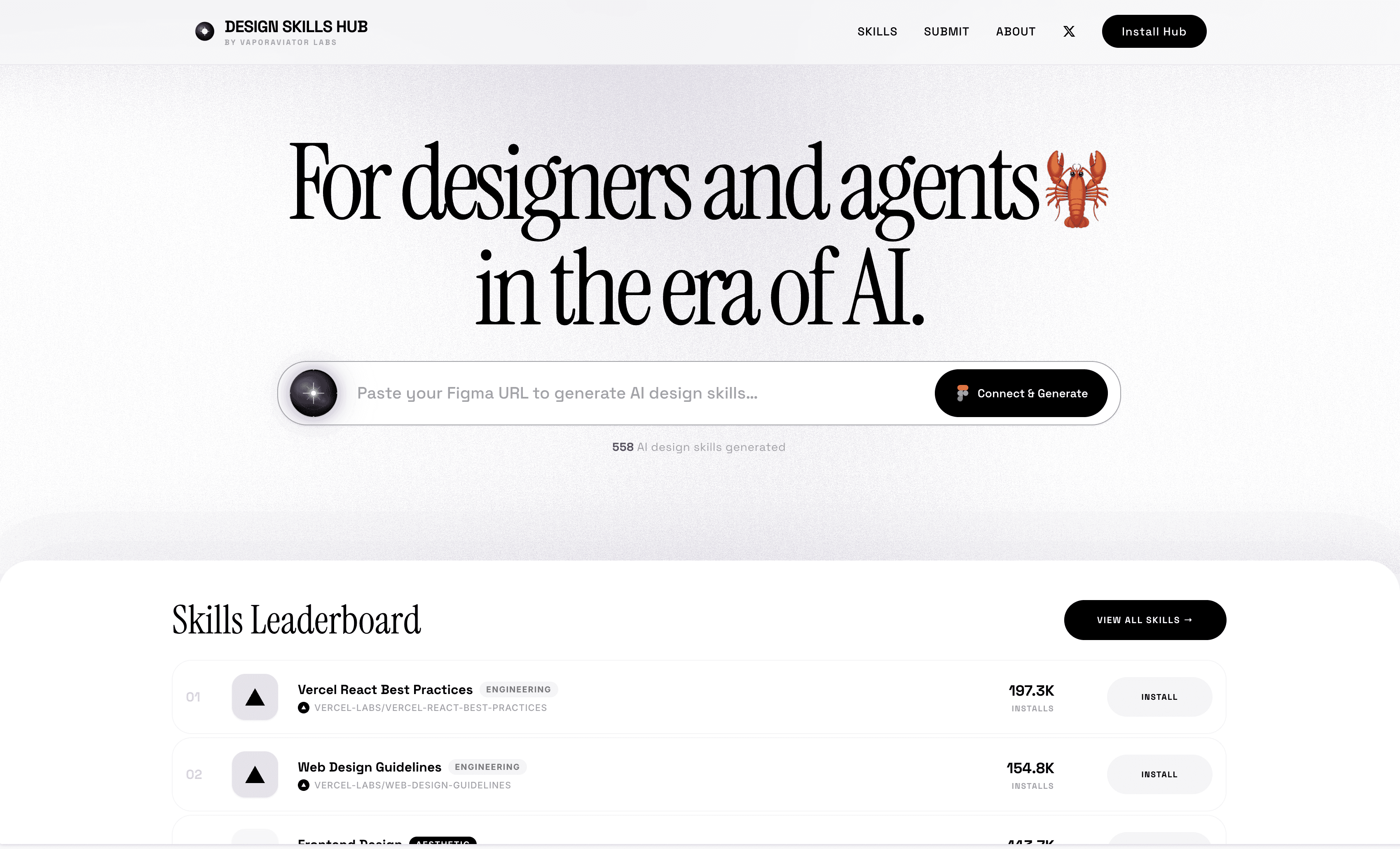
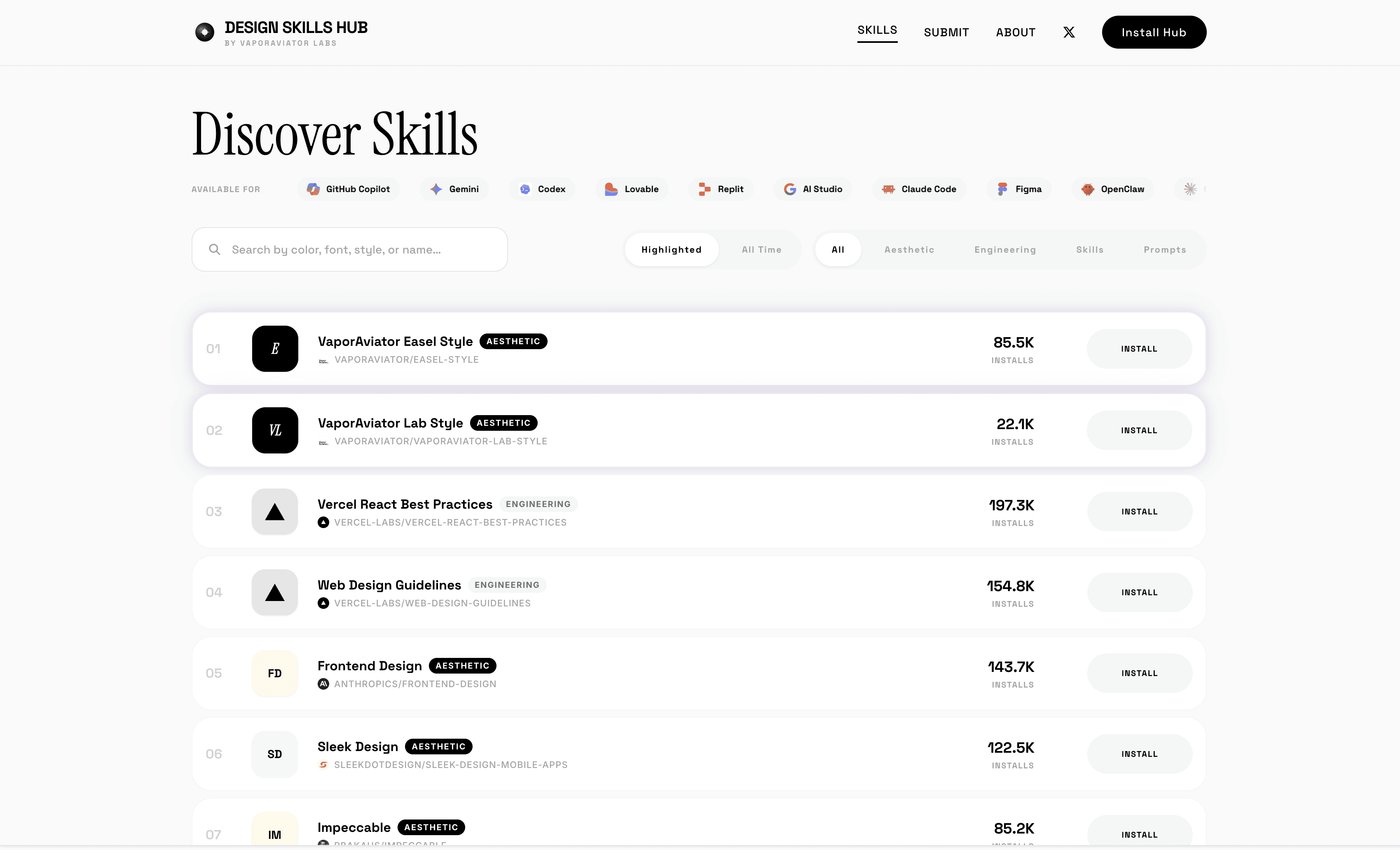
We first validated this demand by launching the Design Skills Hub curated ecosystem. As visible on the live platform, we architected a high-fidelity environment where "Aesthetic" and "Engineering" skills are rigorously categorized and ranked.
The market response was immediate and undeniable. Key "Engineering" skills, such as Vercel React Best Practices, have already exceeded 197,000 installs, proving that the developer community is desperate for structured, deployable rules. By engineering this ranked leaderboard in Framer, we successfully established a Digital Institution for AI-native visual architecture.
The Zero-Friction Pipeline
This week, the industry officially converged on our thesis. Google introduced DESIGN.md as a core standard for Google Stitch, validating the urgent need for structured design input. But defining a standard is only half the battle; the industry still needed the infrastructure to automate it and feed the ecosystem.
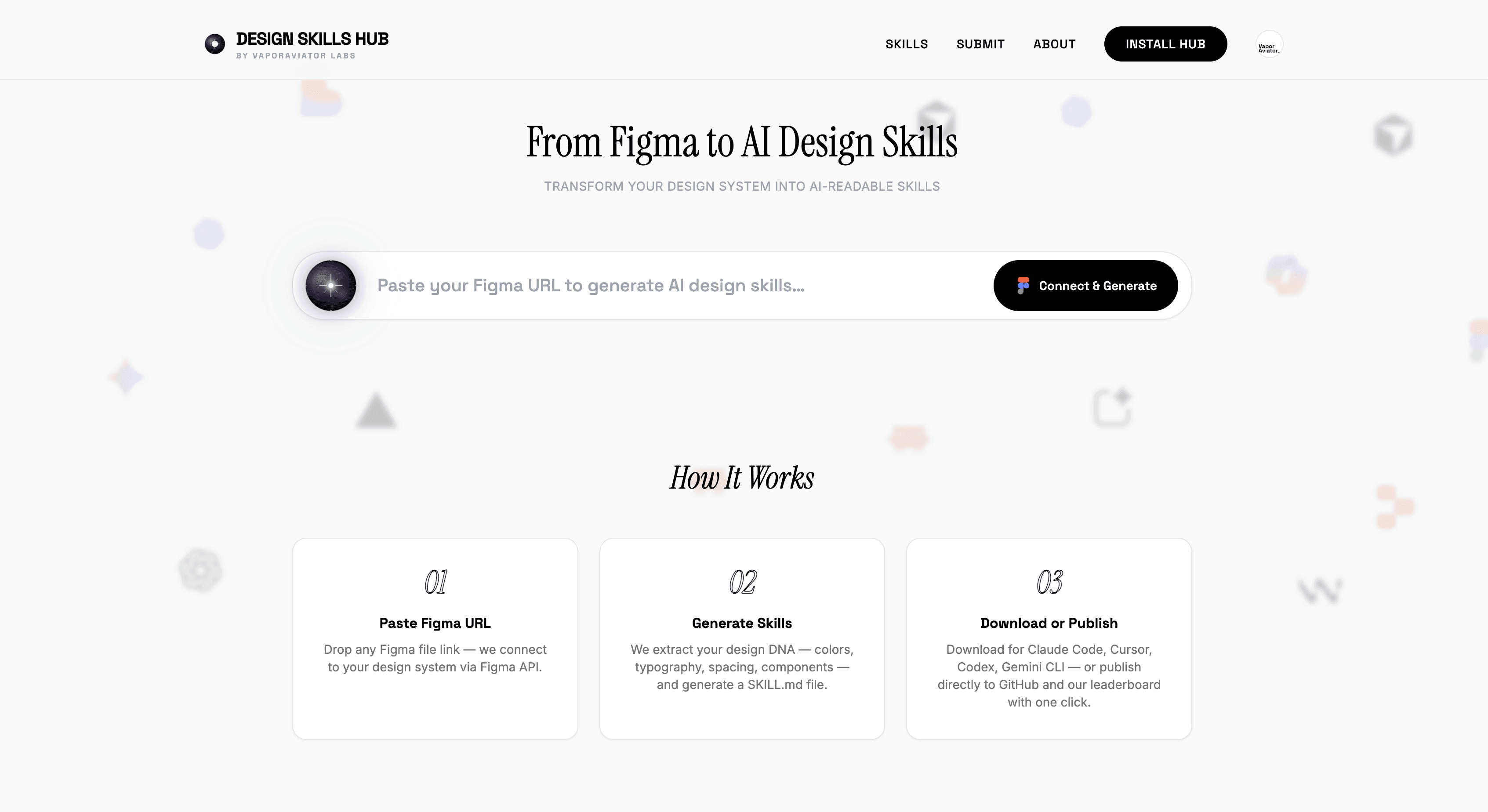
We built the Figma integration to serve as that automated bridge. We engineered a platform that eliminates the manual translation of design tokens into markdown logic.
The mechanism is uncompromisingly direct:
Connect: Paste your Figma file URL.
Extract: The system automatically processes the visual DNA, classifying chroma roles, typographic hierarchies, spatial geometry, and component anti-patterns.
Compile: It instantly generates production-ready
DESIGN.mdandSKILL.mdfiles.
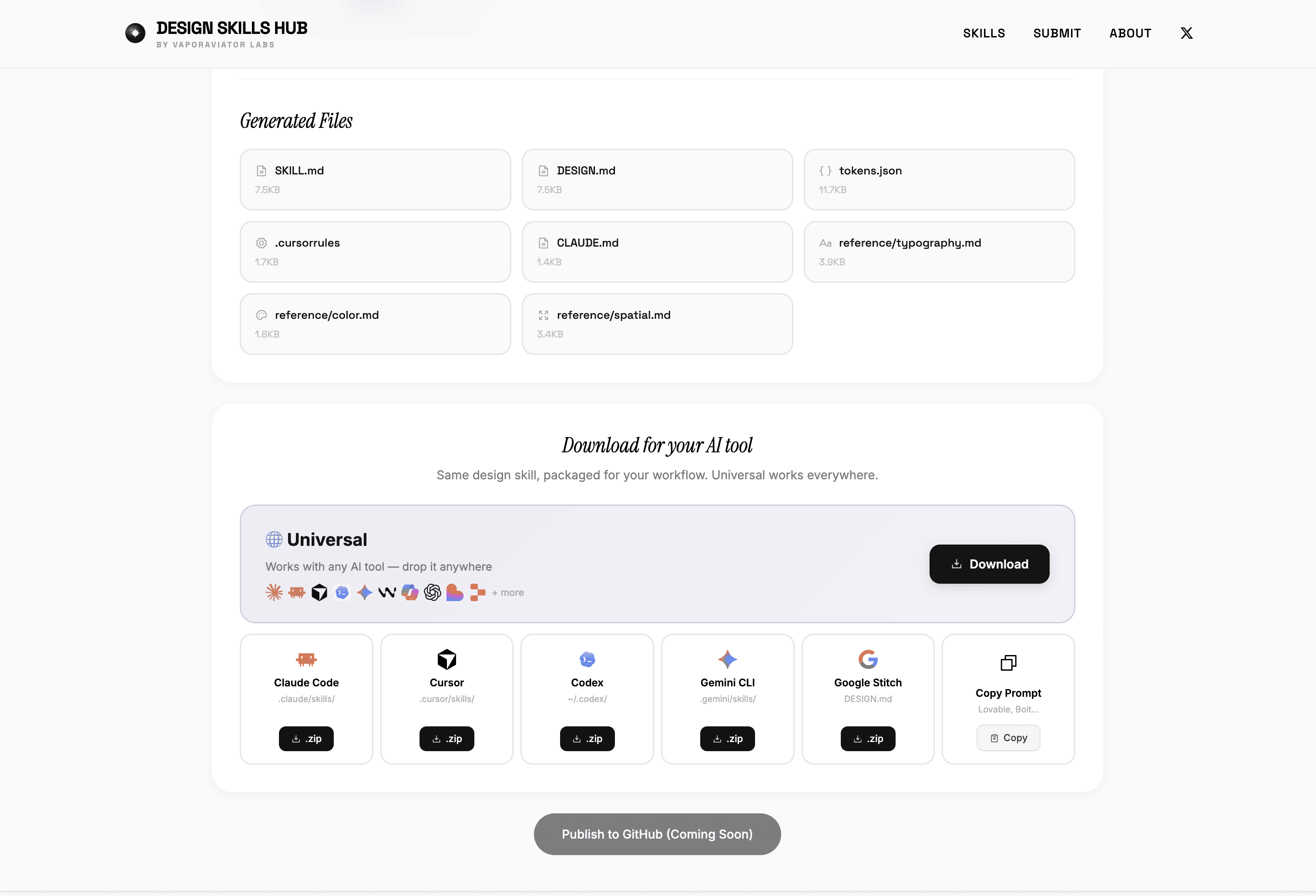
Taste is an Installable Dependency
Design Skills Hub represents a paradigm shift in Design Engineering. We are moving beyond the era of meticulously maintaining visual reference documents. The future of design is executable. If your visual architecture cannot be installed via DESIGN.md or SKILL.md, it will be overwritten by default AI outputs.
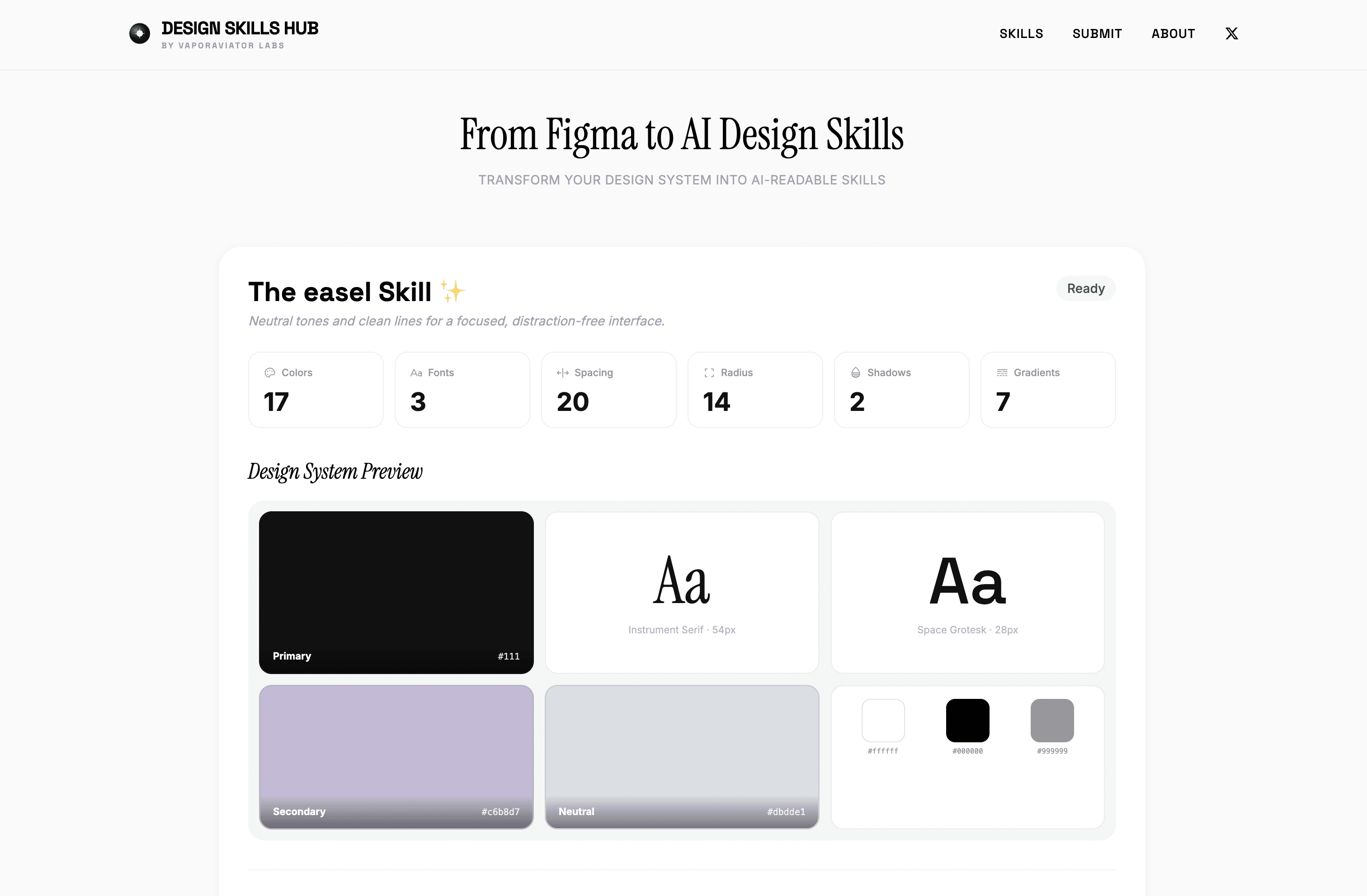
The ecosystem is active, the standard has been set, and the infrastructure is live.
Generate your visual dependency today at designskills.xyz.